Contributing to Ukraine’s resilience & reconstruction
Stay in the loop
Never miss a story! Sign up for daily updates and the latest headlines.
MERIT – Miscanthus Energy for a Resilient and Inclusive Transition
The MERIT Project aims to grow Miscanthus on abandoned and war-torn land. The resulting biomass will be supplied to renewable energy plants and be a sustainable feedstock for advanced construction materials.
By cultivating Miscanthus, a low-maintenance perennial crop, MERIT is leveraging Ukraine’s vast agricultural potential – an industry that comprises 10% of GDP, 15% of employment and 40% of exports. With an estimated 2 million hectares of arable but contaminated land, Miscanthus cultivation provides a viable phyto-remediation strategy while creating income streams for rural communities, in which one-third of the population lives.
The project addresses five key challenges:
1 December 2025 to 30 November 2027
£1.9 million (pound sterling)
Project Focus
MERIT’s innovation lies in adapting existing biomass technologies and identifying suitable Miscanthus genotypes for Ukraine’s climate.
Field trials will determine the best-performing varieties under local soil conditions. To replace existing labour-intensive planting methods ill-suited for Ukraine’s vast landscapes, MERIT will develop precision mechanised planting techniques compatible with local machinery.
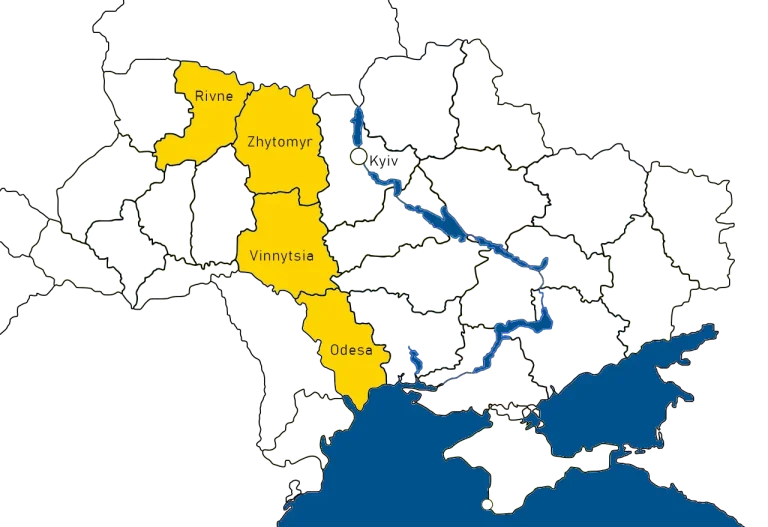
The project will focus on trials in the Rivne, Zhytomyr, Vinnytsia and Odesa oblasts, which represent a cross-section of all climatic zones and soil conditions.
Six Areas of Innovation
Traditional propagation of miscanthus by dividing existing rhizomes is a slow process, increasing the area under cultivation by approximately 20-fold every few years. Given Ukraine’s land resources, which amount to millions of hectares, such a pace is wholly inadequate. Furthermore, the business models, genotype selection, planting techniques and harvesting equipment that are effective for small and medium-sized European farms are ill-suited to Ukraine’s vast, often polluted and infrastructure-constrained agricultural lands.
MERIT combines tissue culture-based micropropagation with cutting-edge agronomic strategies, achieving expansion rates of over 500-fold per season. The main outcome of the project is the establishment of Ukraine’s first specialised centre for miscanthus tissue culture, designed to meet the needs of the local agricultural sector.
By selecting specially developed varieties adapted to Ukrainian winters and contaminated soils, and combining them with tried-and-tested agricultural practices, MERIT bridges the gap between what is available in Europe and what Ukraine actually needs.

Mass Propagation via Tissue Culture
Ukraine’s first miscanthus micropropagation centre produces thousands of uniform seedlings per season, enabling a 500-fold annual expansion rate.

Precision Mechanised Planting
GPS-based protocols adapted to Ukrainian farm machinery reduce labour costs, improve crop uniformity and enable large-scale deployment.

AI-Powered Remote Sensing
Satellite and drone imagery with AI analysis enables automatic weed detection, growth monitoring and yield forecasting across vast field areas.
Field Granulation and Green Harvesting
On-site pelletisation and green biomass harvesting adapted to Ukrainian farm scale allows processing closer to the field, reducing logistics costs.

Phyto-Remediation Assessment
Systematic protocols assess accumulation of harmful substances in miscanthus grown on land affected by military operations and contamination.

Multiple Biomass Utilisation Pathways
Products tailored to multiple markets: pellets for heating, straw bales for energy, green biomass for biogas, and fibres for construction.
What’s new with MERIT that wasn’t there before
Miscanthus cultivation is already well established in Western Europe and the UK. However, Ukraine presents different challenges in terms of scale, land conditions, the severity of its winters and war-related issues — all of which require a fundamentally different approach. Rather than simply replicating the existing model, MERIT is developing new methods specifically designed for Ukraine.

Short-term results

Long-term results
Sponsors, Partners & Collaborations
This InnovateUkraine programme ia funded by the FCDO (Foreign, Commonwealth and Development Office) and UK International Development

Terravesta
Admin Lead
Leader in miscanthus supply chains, supporting growers through long-term contracts. Responsible for knowledge transfer, business model adaptation and overall project coordination.

Miscanthus Technology
Technology Lead
Co-founded by a renewable energy developer and agricultural entrepreneur. Deep expertise in sustainable farming, bio-energy and Miscanthus cultivation on marginal lands.

Frendt
Monitoring and Agronomy Partner
Precision agriculture specialist with a decade of experience in Ukraine. Implements digital tools, collects field data and provides technical consultations on innovation.

Liverpool John Moores University
Scientific Partner
Over 25 years of expertise in Miscanthus physiology. Research covers growth optimisation, rhizome dormancy, seed quality improvement and field-scale emergence.

Cranfield University
Technology Lead
Provides expertise in remote sensing and spatial analysis to support field monitoring and yield forecasting across Ukrainian trial sites.

FCDO / UK International Development
Funder
This InnovateUkraine programme is funded by the Foreign, Commonwealth and Development Office through UK International Development.
Project Progress
Status updates on the progress of the project will be posted here. The project runs from December 2025 to November 2027.
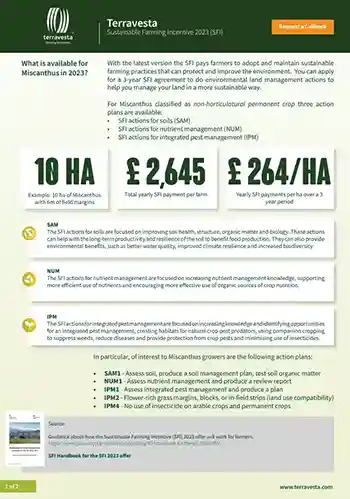
With the latest version the SFI pays farmers to adopt and maintain sustainable farming practices that can protect and improve the environment.
Download UK SFI factsheet
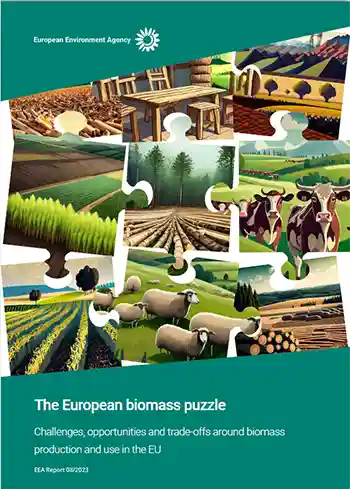
Biomass is a core element of many environmental and climate policies in the EU and is set to play a key role in the transition to a sustainable, climate-neutral economy.
Download EEA biomass report
Media Coverage

lincs sound
25 (21 Dec 2025)
A look ahead to LAMMA and the Oxford Farming Conference, both coming up just after Christmas.

BioEnergy pag.
22, Jan/Feb26
European biogas sector shows modest
growth amid calls for policy clarity

Biomass Felten
15 Dec 2025
A new British-Ukrainian initiative is using miscanthus (elephant grass) to restore and sustain .

BioEnergy Times
10 Dec 2025
A new international initiative is set to support Ukraine’s energy recovery and advance low-carbon development.

BioEnergy Insights
9 Dec 2025
A new international initiative aims to help Ukraine rebuild its energy infrastructure and promote.

Renewable Energy Magazine
8 Dec 2025
Miscanthus specialist, Terravesta, has announced the launch of the MERIT